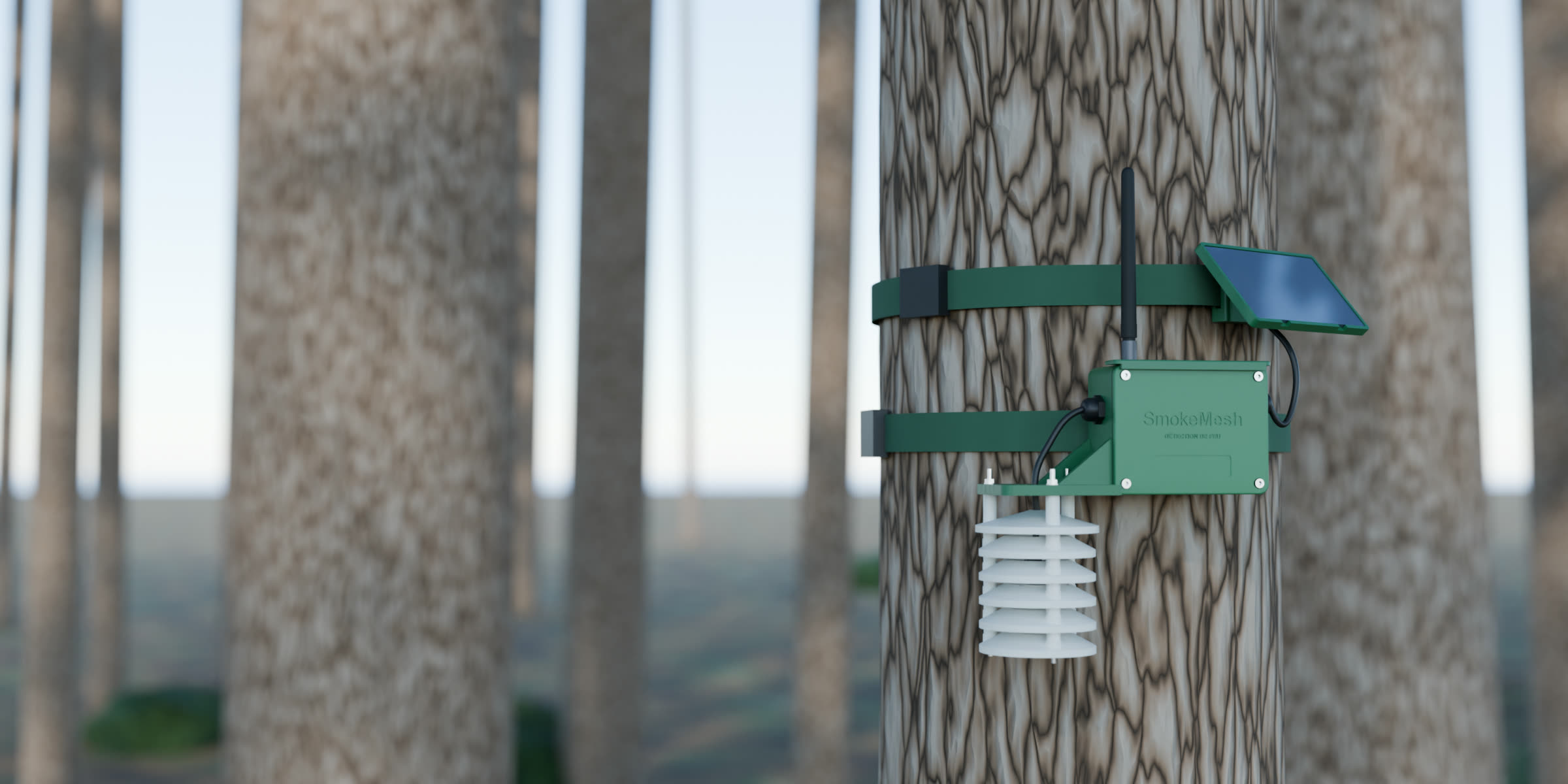
Early wildfire detection
Smell the fire before anyone sees it.
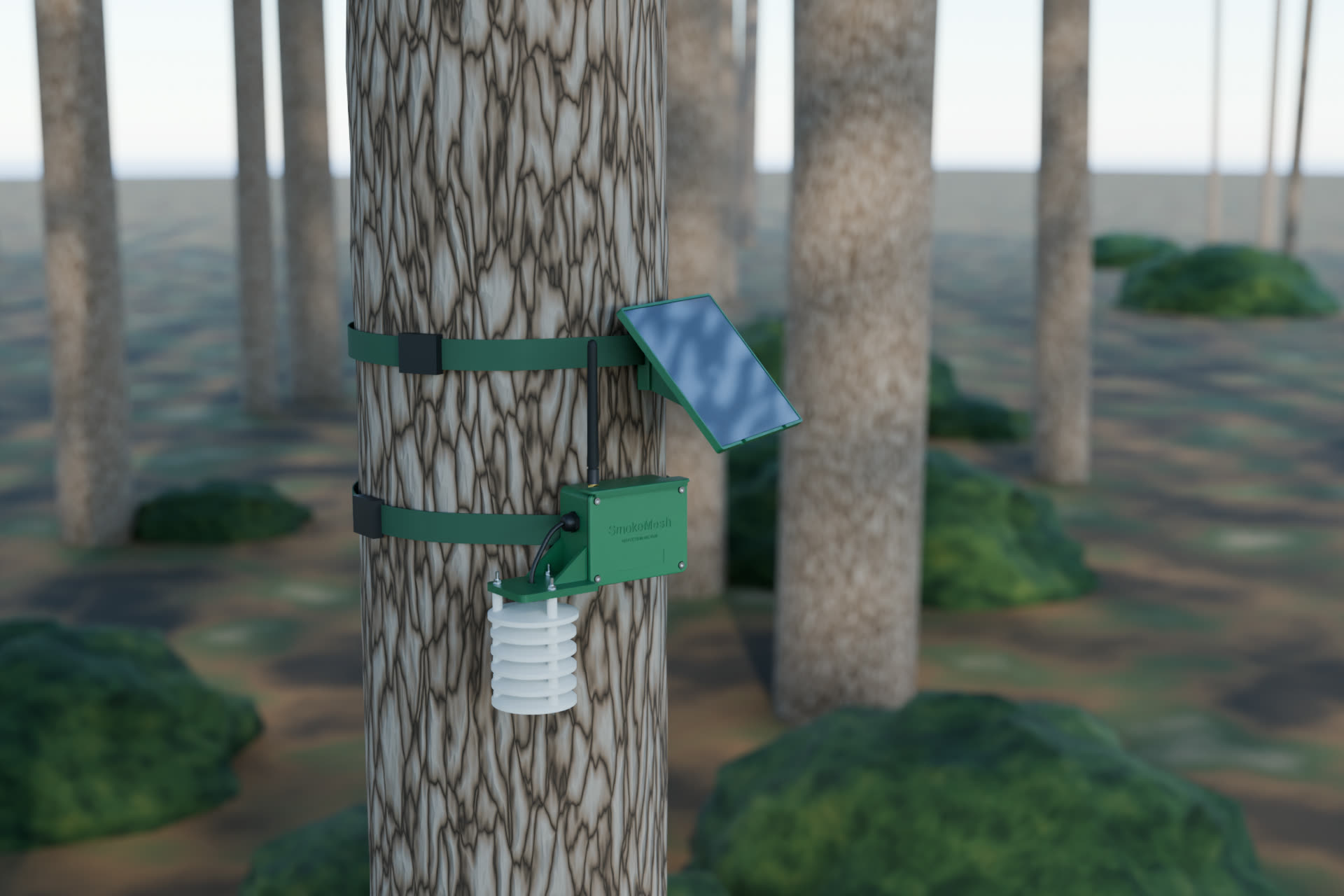
Solar sensors strapped to trees sniff the first smoke and pass the alert from tree to tree over a LoRa mesh network. No cellular coverage needed.
- 10 min
- median time to first alert, one sensor every 300 m (simulated)
- 268 days
- of autonomy without any sun
- 0
- cellular coverage needed in the forest
The first minutes decide everything
A fire spotted early is a few square metres that one fire truck can put out. An hour later it can cover dozens of hectares. Today, wildfires are reported by lookout towers, hilltop cameras, patrols and passers-by, once the smoke column is already visible from afar.
Under the canopy
Sensors sit where fires start, close to the ground, not on a distant hilltop.
Before the flames
They catch combustion gases and the rising heat of a fire that is barely starting.
Beyond the network
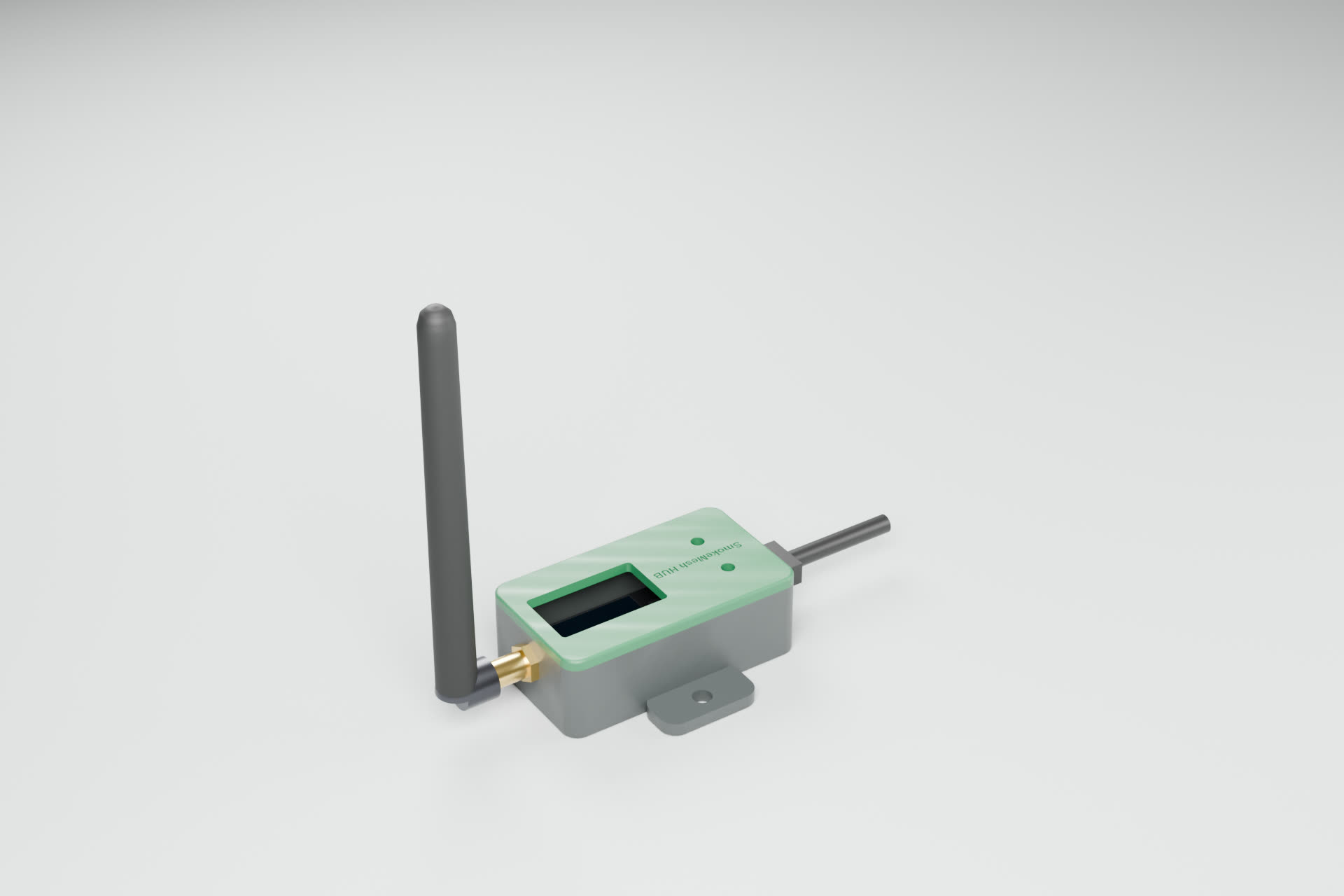
The alert hops from sensor to sensor to a gateway at the edge of the forest.
How it works
- 01
Sense
Every minute, each sensor measures temperature, humidity and combustion gases, then computes a fire score. Sun on the box or a distant barbecue do not trigger it: several signs have to agree.
- 02
Relay
Messages hop from relay to relay over LoRa at 869.5 MHz, up to three hops, within the legal airtime budget. If a relay goes down, the alert takes another path.
- 03
Alert
The gateway forwards everything to a live dashboard. Two neighbouring sensors confirming each other, or a sensor going silent next to a fire, sends an SMS and a Telegram alert.
Try it: start a fire
A simplified version of our simulator. Click anywhere in the forest to start a fire, then watch the sensors catch the smoke and relay the alert to the gateway.
The sensor
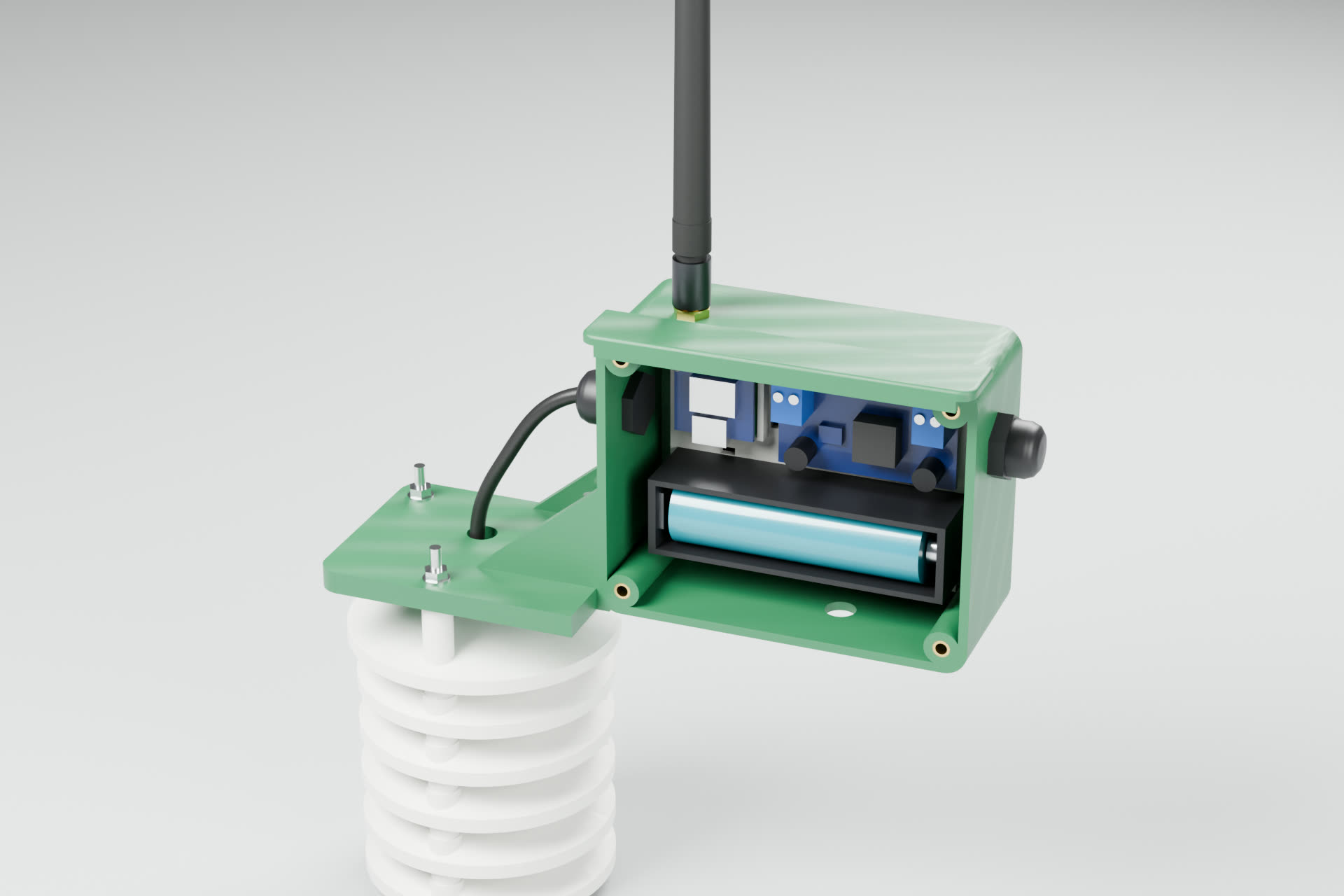
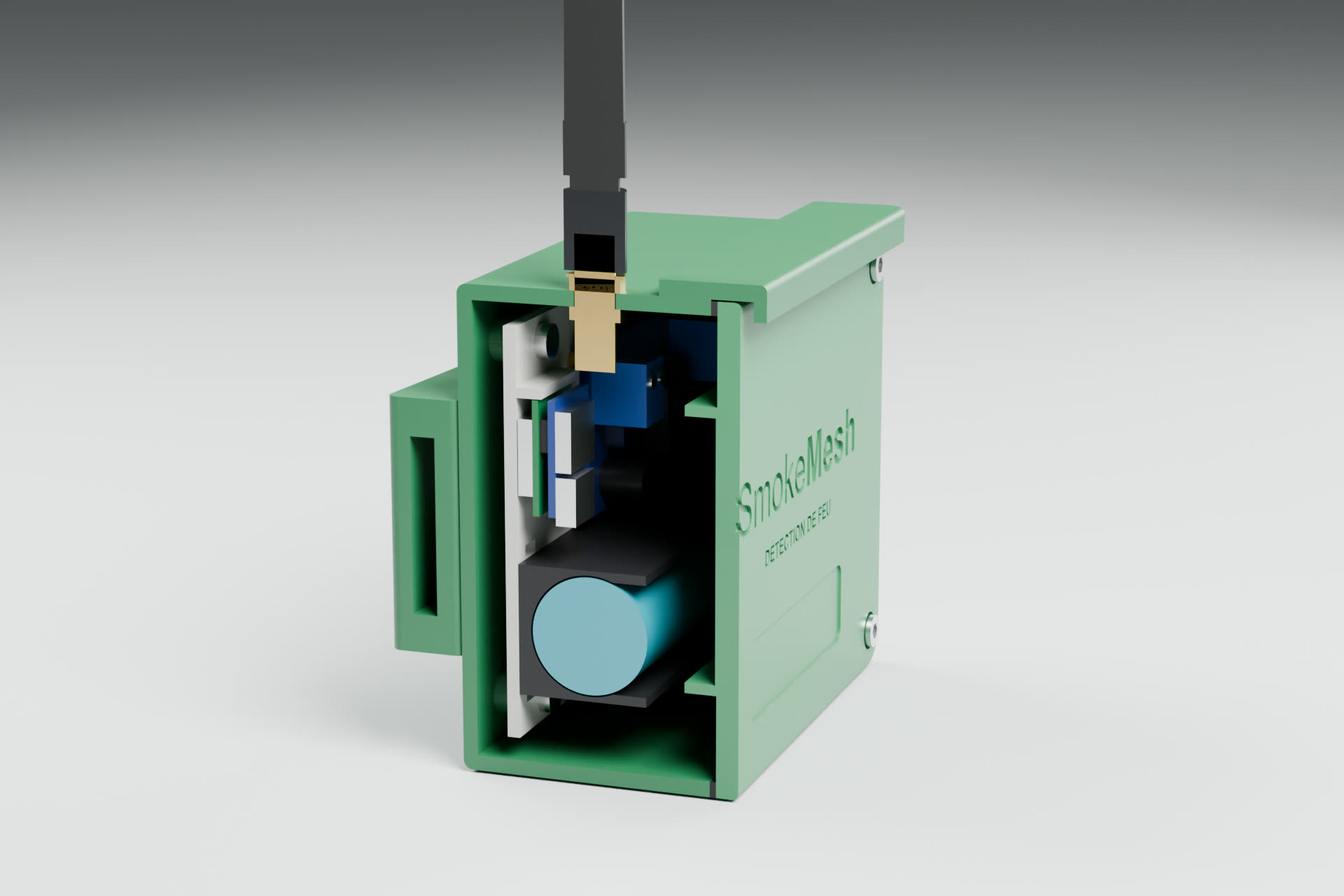
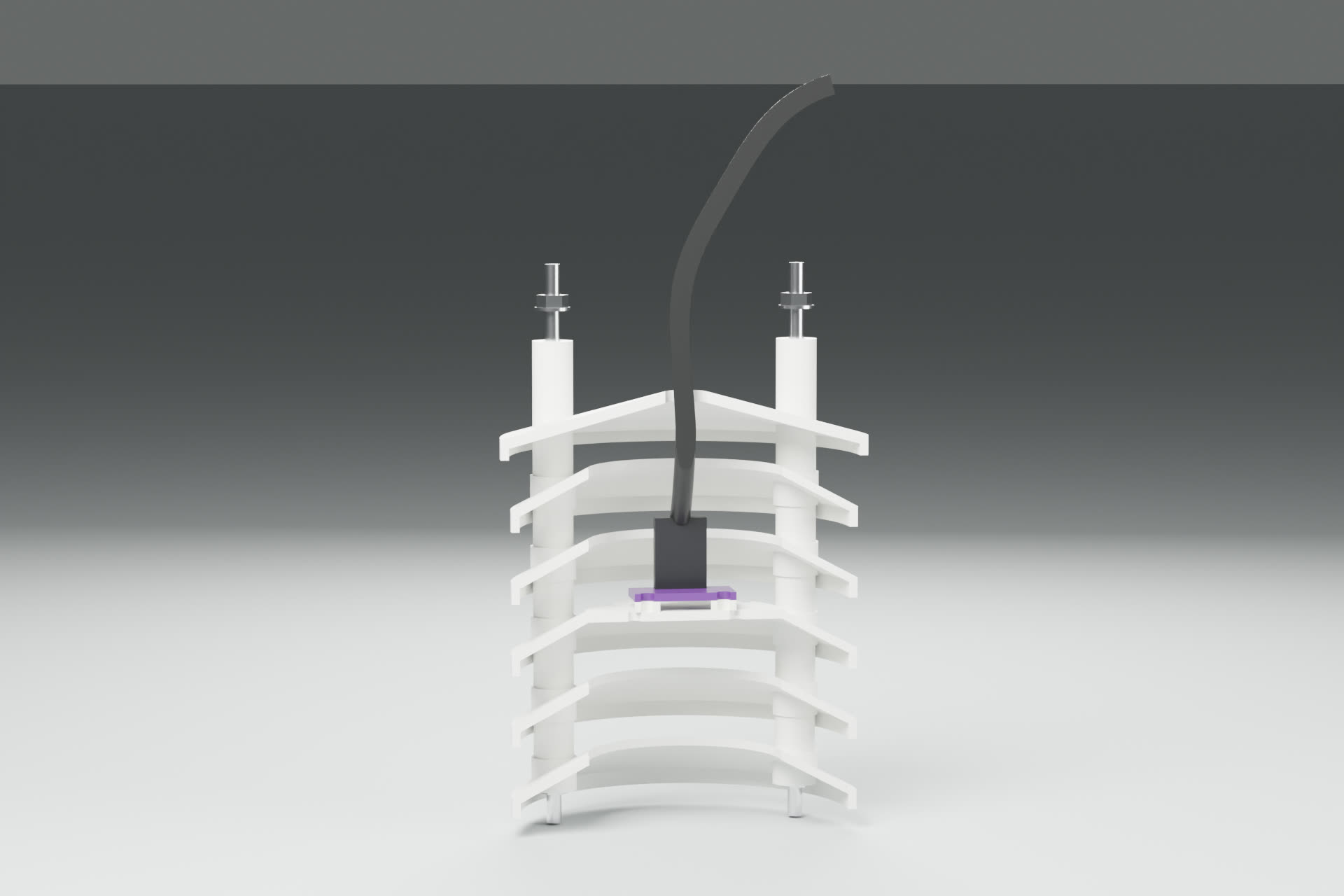
A weatherproof 3D-printed box, a radiation shield that protects the gas sensor from the sun, a small solar panel and one 18650 cell. Everything is open: firmware, models and 3D files.
- Microcontroller
- ESP32-S3 (Seeed XIAO), 80 MHz, deep sleep between measurements
- Radio
- Semtech SX1262, LoRa 869.5 MHz, mesh relaying up to 3 hops
- Sensing
- Bosch BME688: temperature, humidity, pressure, combustion gases
- Power
- 1 W solar panel, MPPT charger, 3000 mAh Li-ion cell
- Consumption
- 9.5 mAh per day (model)
- Range in forest
- About 600 m from sensor to relay (model, to be confirmed on site)
- Enclosure
- PETG and white ASA, designed for IP65, strapped to the tree: no nails
- Cost
- About €65 of parts per sensor
Explore it in 3D
Drag to rotate, pinch or scroll to zoom, and explode it to see inside.
What our models say
Every design choice was checked with a simulation or a model before building anything. Field tests come next.
Time to first alert vs sensor spacing
false alerts on our test scenarios: heat wave day, sun on the box, distant barbecue
of radio airtime used by a relay during a fire, out of the 10 % allowed
on battery alone, and the 1 W panel keeps it full all year under the trees
parts modelled and checked for collisions, from the box to the screws
Where we are
- Done
Design, firmware and radio protocol
Sensor, relay and gateway code, tested on a computer.
- Done
Simulator and live dashboard
Fire spread, smoke, mesh network and batteries.
- Done
3D-printable enclosure
Box, lid, gasket, radiation shield and solar mounts.
- Next
Bench tests with real boards
Heat gun, smoke and power measurements.
- Planned
Range tests in the forest
Measuring the real radio range under the trees.
- Planned
A first pilot
With a forest manager, on a high-risk area.
A student engineering project
SmokeMesh is a final-year STI2D engineering project from France (2026–2027). It was designed to be cheap, open and easy to build, so that forest owners, towns and fire services can try it.